
Living in Utah County: Housing, Communities, and What to Expect
- Micah Roquiero
- Jan 21
- 5 min read

Utah County has become one of the most in-demand places to live in Utah—and it’s not hard to see why. It sits at the center of the “Utah Valley” corridor with strong job growth, two major universities, expanding transit options, and a wide range of communities that feel very different from one another.

If you’re relocating (or moving within Utah), the biggest mistake is thinking “Utah County” is one lifestyle. In reality, it’s a collection of micro-markets—from walkable, historic neighborhoods near universities to fast-growing master-planned communities with new construction as far as the eye can see.
This guide breaks down the big-picture essentials: housing styles, community vibes, commute realities, and the practical surprises newcomers often run into.
Why Utah County is growing so fast
Utah County’s growth is driven by a mix of jobs, universities, and household formation. The Provo–Orem–Lehi metro area has ranked among the fastest-growing metros nationally in recent Census estimates—often cited around 3% annual growth in the period highlighted—putting it in the top tier nationwide.
That growth shows up in real life as:
Rapid homebuilding in specific corridors
New schools, retail, and infrastructure catching up to demand
A housing market that can feel competitive even during “slower” statewide cycles
A good example of how fast certain cities are expanding: Saratoga Springs (Utah County) was identified as the fastest-growing large city in Utah in 2024, with reported growth of 9.3%.
The Utah County layout: the simplest way to understand it
A helpful mental map is to think in three “bands”:
1) North Utah County: Lehi → American Fork → Pleasant Grove
This area is closely tied to job centers and the Silicon Slopes corridor. Many relocation
buyers like it because it blends:
Newer neighborhoods and amenities
Freeway access for north/south commutes
Proximity to tech employers and office campuses (without being downtown SLC)
Trade-off: It can feel busier and more developed, with higher traffic at peak times.
2) Central Utah County: Orem + Provo (and nearby neighborhoods)
This is the “core” with universities, older established neighborhoods, and more
walkability in select areas. It’s also where you’ll find a larger mix of:
Condos/townhomes
Student-adjacent rentals
Older homes on mature streets
Utah Valley University (UVU) has reported record enrollment (46,809 total students for fall 2024), which helps explain why certain pockets feel more rental-driven and why traffic patterns can revolve around the academic calendar.
3) South & West Growth: Spanish Fork → Springville → Eagle Mountain → Saratoga Springs
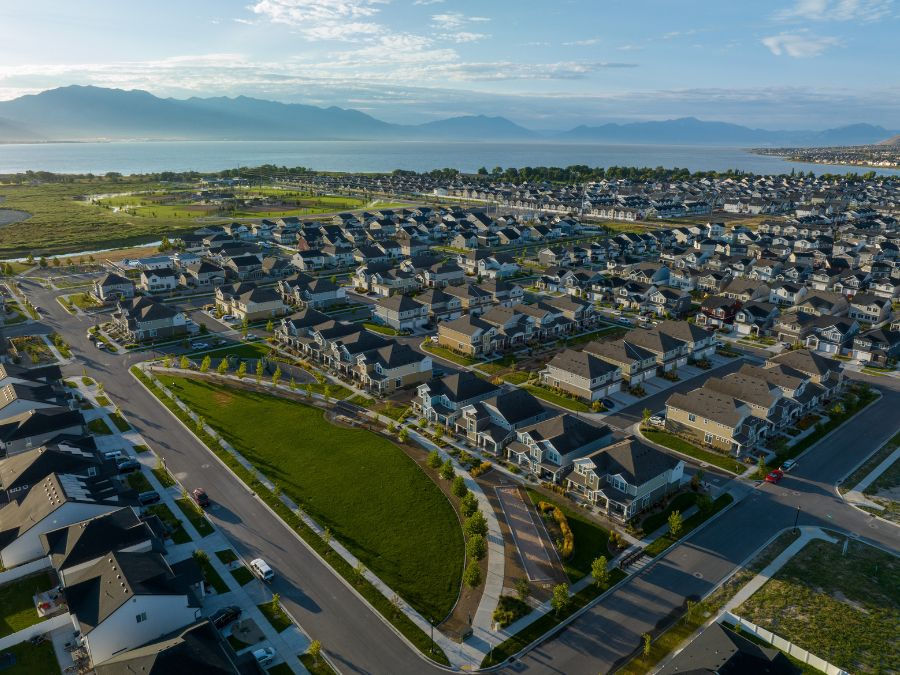
This is where a lot of new construction and master-planned growth is happening. It’s
popular for buyers who want:
Newer homes and floorplans
More home for the budget
New parks, schools, and community amenities
Trade-off: Commute time can increase, and some areas feel like they’re still “being built out” (roads, retail, services catching up).
Housing in Utah County: what’s actually common
Utah County offers a wider mix than many newcomers expect.
Established single-family neighborhoods
Most common near Provo/Orem and older parts of central cities:
More mature trees and established streets
Wider range of home ages and layouts
In many cases, better access to jobs/schools/transit
Townhomes and condos
More common near job corridors and central areas:
Often come with HOAs and rules
Can be a strong fit for first-time buyers or downsizers
Location tends to be the big value driver
New construction (a major theme)
Utah County is a centerpiece of Utah’s growth, so new builds are a constant. The upside:
Modern finishes, energy efficiency, warranties
Builder incentives in certain market conditions
New amenities and community design
The downside:
HOA structures are common in planned developments
Lots can be smaller than people expect
Build timelines and design selections can add complexity
Transportation and commuting: what surprises people most
I-15 shapes daily life
Utah County is a north–south commuter corridor. Even if a location looks “close,” traffic can change the feel of your day depending on where you work and when you drive.
Transit is real—if you choose location intentionally
Utah County has more transit infrastructure than many out-of-state movers expect:
FrontRunner commuter rail connects major hubs including Orem Central and Provo Central, and Utah’s “FrontRunner Forward” planning documents reference service operating at 30-minute frequency (with expansions and double-tracking plans in development discussions).
UVX (Utah Valley Express) is a bus rapid transit line between Orem and Provo, connecting major destinations including UVU and BYU-area access points.
Practical takeaway: If transit matters to your lifestyle, pick your home around stations/corridors early—don’t assume you’ll “start using it later.”
Air quality and weather: the “Utah Valley” version
If you’re moving from a coastal or windy region, the valley geography can be a surprise.
Winter inversions can affect Utah County too
Utah’s valley inversions can trap pollution in winter. Utah DEQ notes that a typical winter can bring five to six multi-day inversion episodes and an average of 18 days with elevated PM2.5 exceeding the national standard.
This doesn’t mean “bad air every day,” but it does mean:
Some winter days look sunny and still feel hazy
People plan outdoor workouts around air forecasts
Good HVAC filters and air purifiers are common in many households
Community feel: what it’s like day-to-day
Utah County often feels:
Family-forward (parks, youth sports, school-centered communities)
Community-oriented (events, faith/community networks, local business support)
Outdoor-integrated (hiking, biking, skiing access becomes routine)
The lifestyle difference between, say, central Provo and newer west-side growth communities can be dramatic—so it’s important to match your location to your preferred day-to-day rhythm.
Who Utah County is best for
Utah County is often a strong fit for:
Relocation buyers seeking long-term stability and growth
People working in tech, education, or along the north corridor
Buyers who want a blend of outdoor access + suburban convenience
Families wanting newer housing options and master-planned amenities
It may be less ideal for:
People who need true “big city” density and nightlife
Buyers who want minimal driving without choosing a transit-focused location
Those who strongly prefer older, walkable urban neighborhoods (you can find them—just more selectively)
A simple checklist before choosing a city in Utah County
Before you lock in a neighborhood, confirm:
Your real commute (test drive it at peak time)
Whether the community has an HOA (and what it covers/restricts)
Whether you want new construction (and can tolerate build timelines)
Your winter plan: inversions + snow + canyon travel
Your “life priorities”: walkability vs space vs newer homes vs proximity to work
Bottom line
Utah County is one of Utah’s strongest long-term relocation plays because it combines job growth, education anchors, expanding infrastructure, and a wide range of housing—from older established areas to high-volume new construction corridors. Its biggest advantage is choice. Its biggest risk is choosing a location based on price alone without thinking through commute and lifestyle fit.


Comments